Date:
Time:
Cost:
Contact name:
Telephone number:
Contact email:
Venue:
Spring Street
Ewell
KT17 1UF
GB
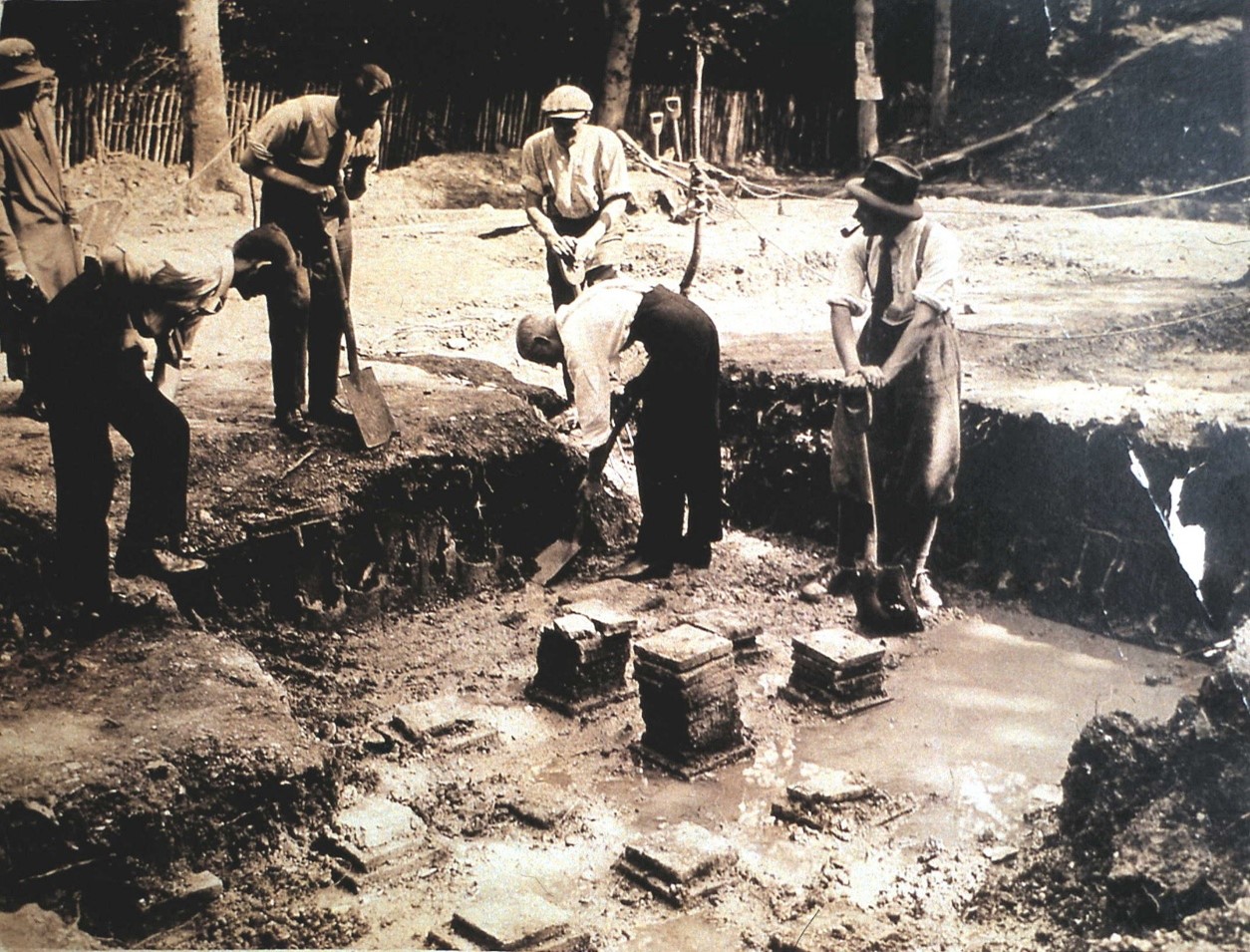
Join David Bird as he tells the fascinating story of the villa for the Festival of Archaeology.The Ashtead Common Roman villa was first discovered and excavated by Anthony Lowther in 1924-9, and there was further work by John Hampton in the 1960s. The writer initiated a new project in 2006 aiming to reassess all the earlier work and add new information, with excavation in 2006-2013. It can now be shown that the Ashtead villa and tileworks complex is a very important site with many features unusual in Roman Britain. The original dig revealed a villa with a plan that has been described as unique and a separate bath-house with a circular heated room, very unusual on a civilian site. The recent excavations established that the nearby earthwork is prehistoric, added a separate proto villa, and found earlier features in Lowther’s villa as well as indications of an earlier building below it. In the tilery we found a big tile kiln with very unusual surviving features that allow us to postulate a different reconstruction from the ones usually suggested. One room of the villa has a strange hypocaust, evidently experimental, and it can now be dated to the AD 60s if not earlier. Box tiles to heat the room were fixed to the walls using a method seemingly without parallel in the Empire. The tiles, which must have been made on the site, are decorated with patterns that can be shown to belong to an industry probably serving the Surrey-Verulamium area but with some being sent further afield. These and other finds suggest that Ashtead was at the heart of experimental Roman bath technology in the mid-first century AD. One type of box tile was decorated with animal figures in a design that seems to be unique in the Empire. The Ashtead tile industry (and an associated pottery industry that certainly supplied Ewell) probably continued across 150 years, creating a very large clay pit. Other unusual finds from the site include a stone slab probably once carrying an inscription and tiles specially made to form attached columns. Taken as a whole, the finds indicate a long-lasting link to the Roman military community (but not a military site as such) and a high standard of living for the owners. The site was probably abandoned in the early third century. Detailed research on the finds from all the excavations has been carried out since completion of excavation in 2013 and a full report is in active preparation.Upcoming events | Bourne Hall